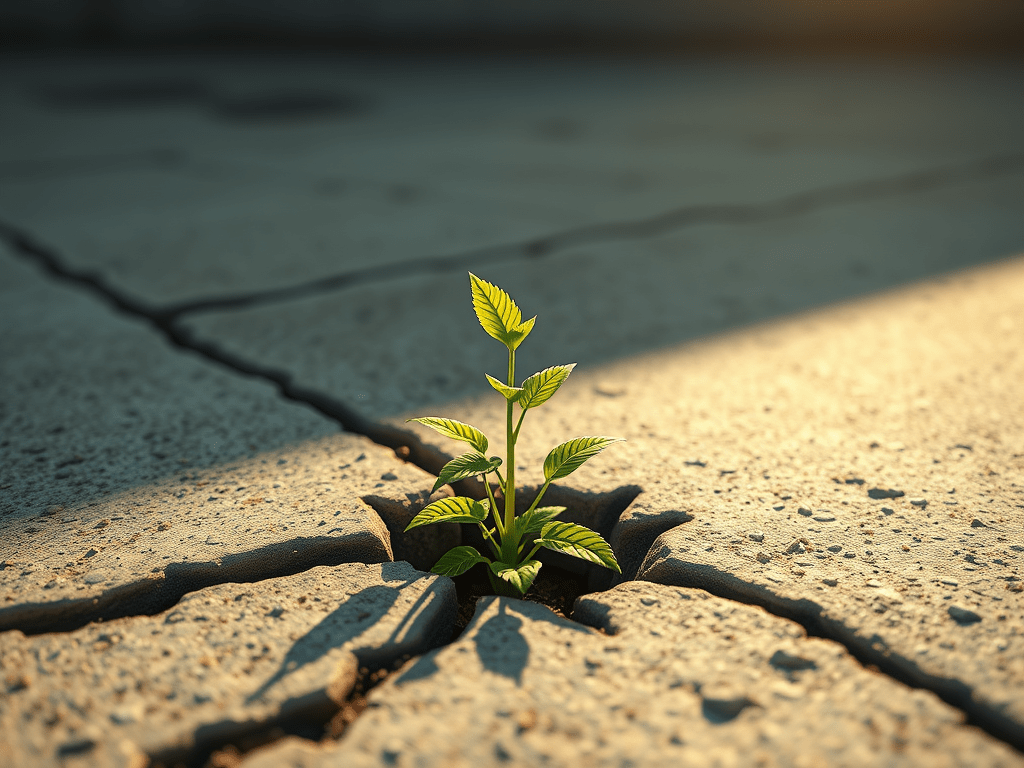
Embarrassingly Small, Wildly Effective: How Micro-Habits Actually Rewire You
In January, I set some big goals:
Run a marathon. Meditate 30 minutes a day. Learn Spanish. Write a novel.
By January 15th, I had done… exactly none of them.
By February, I was so demoralized I said screw it—I’ll try something stupidly small. Stuff so tiny I couldn’t fail:
- One push-up after brushing my teeth
- One journal sentence before bed
- One Spanish word on Duolingo with my morning coffee
My friends laughed. “That’s not even exercise,” one said. “One word? You’ll never learn Spanish that way.”
They were wrong.
By December, I was cranking out 50 push-ups without thinking. I had 40,000 words in my journal. I could hold a basic conversation in Spanish. But none of that was the real win.
The real win? I had become someone who shows up. Someone who does the thing daily. And that identity shift changed everything.
Why Big Goals Backfire (and Tiny Ones Don’t)
Here’s what nobody tells you: your brain isn’t wired for massive goals. It’s wired to protect you from them.
In a study from Psychological Science (Galla & Duckworth, 2015), researchers found that people with the strongest self-control weren’t “pushing through.” They were designing their lives to make self-control unnecessary.
Big goals trigger resistance. Your brain’s like an overworked accountant staring at an expensive travel budget: “Hard pass.”
Tiny actions, though? They sneak under the radar. One breath. One stretch. One word. No friction. No internal debate.
The Psychology of “Almost Too Small to Count”
I used to think micro-habits were training wheels—something you outgrow. Then I read the data.
A 2020 systematic review in Behavioral Medicine analyzed dozens of behavior-change interventions. The winners had three things in common:
- Stupidly specific – Not “journal more,” but “write one sentence at bedtime.”
- Anchored – Tied to an existing habit (“after I brush my teeth…”).
- Embarrassingly easy – So simple your brain can’t resist.
And here’s the kicker: these weren’t just easier to stick with. They created a snowball effect. Start with one push-up, and soon you’re doing five. Then ten. But it’s never forced. It unfolds naturally.
Your brain likes momentum. You just have to give it the tiniest nudge.
The Habit Myth Everyone Gets Wrong
You’ve heard it takes 21 days to build a habit. False.
In reality? It varies—a lot.
A study by Lally et al. (2010) found the average was 66 days. But here’s what matters: simple habits lock in faster. “Drink water after breakfast” might become automatic in 18 days. “Go to the gym for 90 minutes”? Try 8 months.
The takeaway: if you want habits to stick, don’t start big. Start tiny. Humblingly tiny.
The Identity Shift Is the Whole Game
Two weeks into doing one push-up after brushing my teeth, I had a strange thought:
“I’m someone who exercises.”
Not trying to exercise. Not supposed to exercise.
Just… someone who does.
That shift is everything.
Every micro-action is a vote for a new identity. And your brain doesn’t care whether it’s one squat or 100. When it comes to habit formation, small actions carry full weight.
Research in Personality and Social Psychology Review backs this up: identity-based habits are more durable than outcome-based ones. “I’m a reader” is stronger than “I want to finish 20 books.” “I move every day” is more powerful than “I need to lose 20 pounds.”
4 Micro-Habits That Actually Work
Here are four micro-habits that don’t sound like they came from a self-help bingo card—but actually changed my life:
Phone Jail (Pre-Meal Edition)
- When: Before meals
- What: Put your phone face-down, across the room
- Why: Environmental friction beats willpower (Health Psych Review, 2019)
- Result: You’ll actually taste your food. Maybe even talk to someone.
Hand-Wash Meditation
- When: Every time you wash your hands
- What: One conscious breath while soaping
- Why: You do it 8–10 times a day, automatically
- Result: Built-in stress relief. Like sneaking in mindfulness without adding time.
Gratitude Hijack
- When: While waiting for an app to load
- What: Name one thing that doesn’t suck about this moment
- Why: Gratitude rewires your brain—even in tiny bursts (Journal of Happiness Studies, 2020)
- Result: You go from annoyed to aware. Micro-upgrade in mindset.
Zoom Call Calf Raises
- When: During work calls
- What: Heel raises while seated or standing
- Why: NEAT movement burns calories invisibly (Mayo Clinic, 2015)
- Result: The strongest calves no one will ever see.
Why This Works When Motivation Fails
Most people try to change their lives by changing their goals. That’s backwards.
You don’t need a new goal. You need a new trigger.
When you say, “I’ll work out every day,” your brain stalls. But when you say, “After I finish my coffee, I’ll do one wall push-up,” you’re running a script—not making a decision.
This is called an implementation intention: when X happens, I do Y. It’s how you bypass your motivation (which is unreliable) and ride on automatic behavior (which is reliable).
The Real Talk
Let’s be honest: doing one push-up feels stupid.
So does taking one deep breath. Or reading one sentence. Or writing one word.
But you know what’s actually stupid? Setting massive goals, failing by day four, feeling like garbage, and repeating the cycle every few months while telling yourself you just “need more motivation.”
Your ego wants the transformation story.
But your nervous system wants a routine it doesn’t have to think about.
You can’t ego your way into consistency. You have to humble your way there.
Your Challenge This Week: One Tiny Thing
Pick one. Do it every day this week:
- After you close your laptop → stand and stretch for 5 seconds
- When you grab your phone → say one thing you’re grateful for
- After your morning coffee → write one sentence in a journal
- When you take off your shoes → do one squat
- Before you open social media → take one deep breath
Make it so small it’s embarrassing.
Because that embarrassment? That’s the part of you that still believes only “big things” count.
Ignore it.
Six months from now, your life might look completely different. And it’ll all start with something so tiny, no one else would notice.
But you will.
P.S. If one push-up still feels like too much? Just get into position. Stay there. Let your body remember what “showing up” feels like.
Because showing up daily—even stupidly small—is how you win.


 Ripple Habit
Leave a comment